June 2026 Luxury Results: Richemont Runs Away, and Is Kering Really Turning?
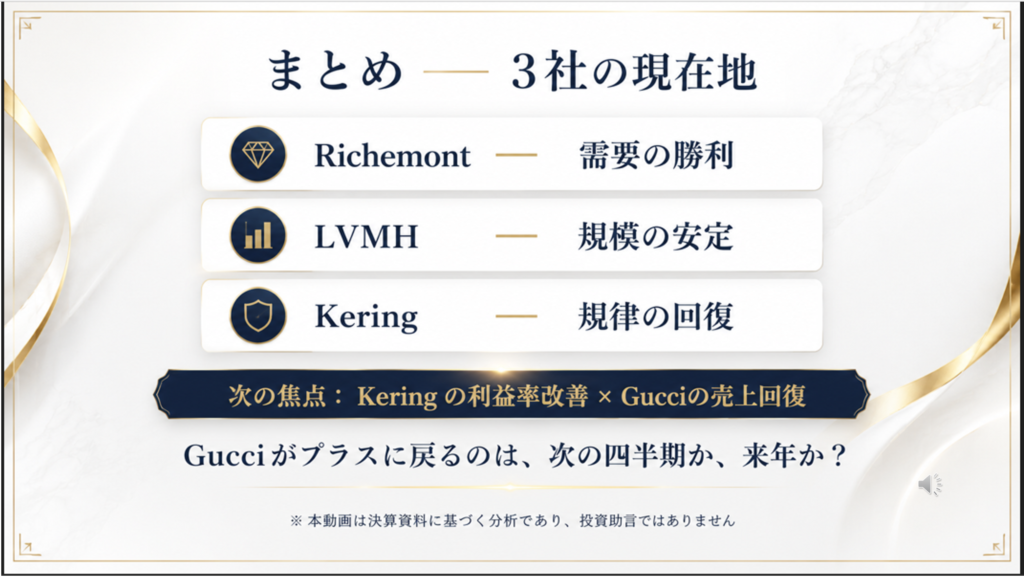
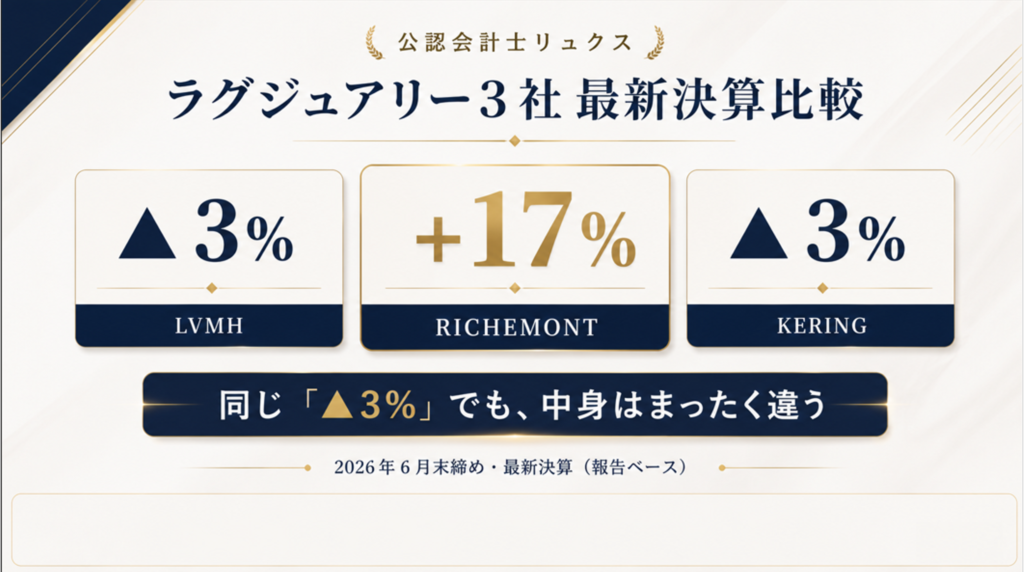
LVMH, Richemont and Kering have all now reported. Revenue growth: Richemont +17%, LVMH and Kering both −3%.
The two declines are not the same decline. LVMH is a plateau with earnings power intact; Kering is a recovery phase with restructuring underneath it. What this set of results shows is that portfolio composition, not brand strength alone, is what moves the numbers.
Reading the direction, not just the sign
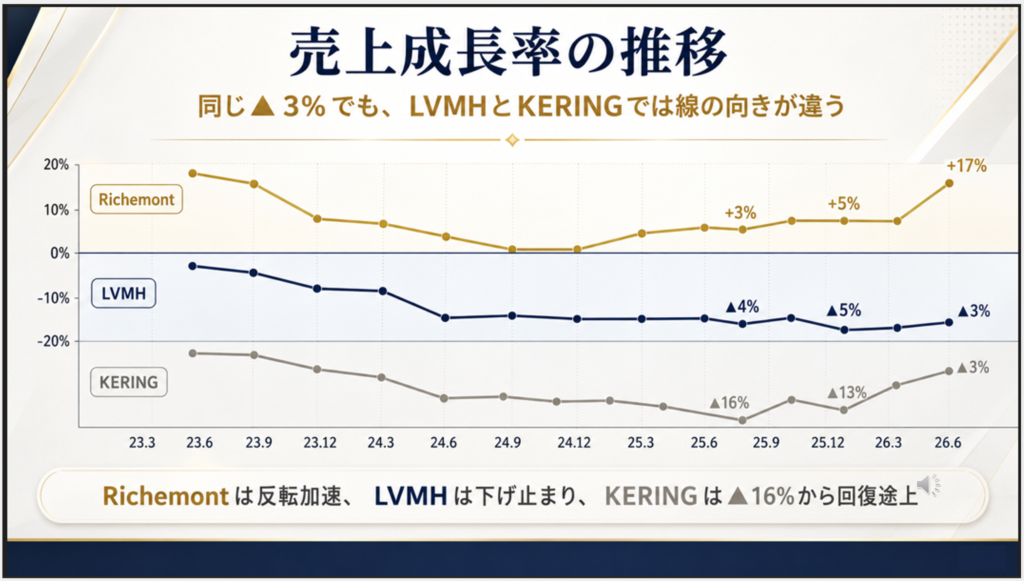
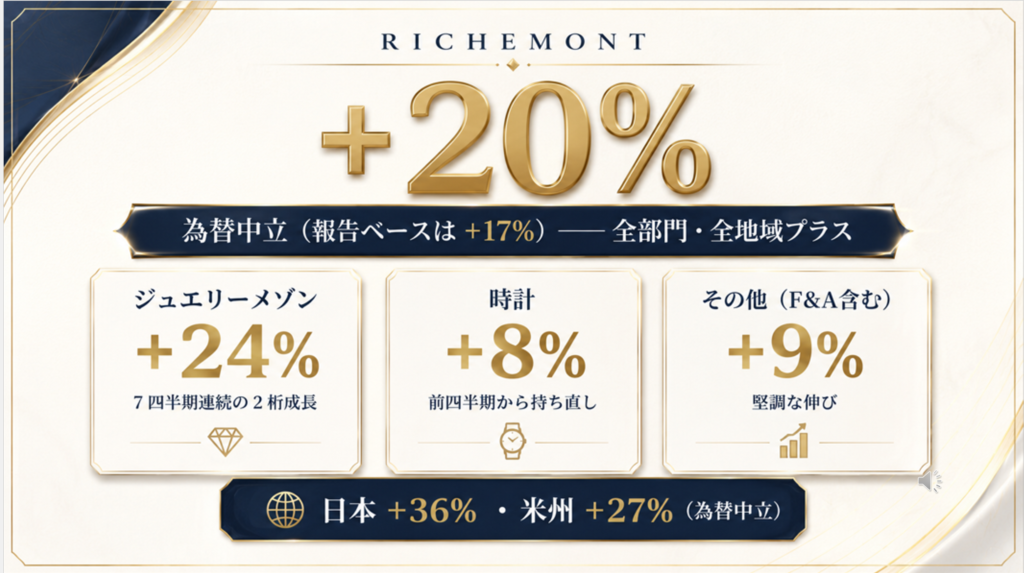
Richemont grew 17% as reported, 20% excluding currency. LVMH was −3% as reported but +2% organic. Kering was −3% as reported and +1% on an underlying basis — and its April–June quarter was +2%, the first quarterly return to growth in roughly three years.
Same headline decline; stability at LVMH, inflection at Kering.
Why Richemont is winning
Jewellery, and specifically Cartier and Van Cleef & Arpels. The division grew 24% ex-currency — a seventh consecutive quarter of double-digit growth.
It is not a single-region story either: Japan +36%, the Americas +27%. High jewellery combines scarcity, store-of-value characteristics and gifting demand, which makes the category comparatively resilient through the cycle.
LVMH’s model, and Kering’s rebuild
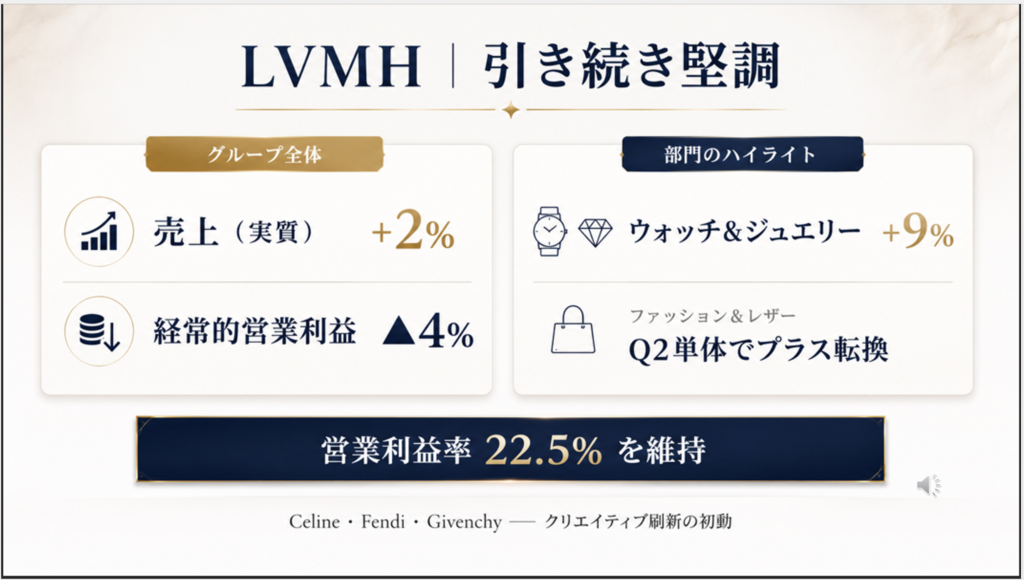
At LVMH, Watches & Jewellery grew 9% and offset weakness in Fashion & Leather Goods. The operating margin held at 22.5%. That is the diversified model doing exactly what it is supposed to do.
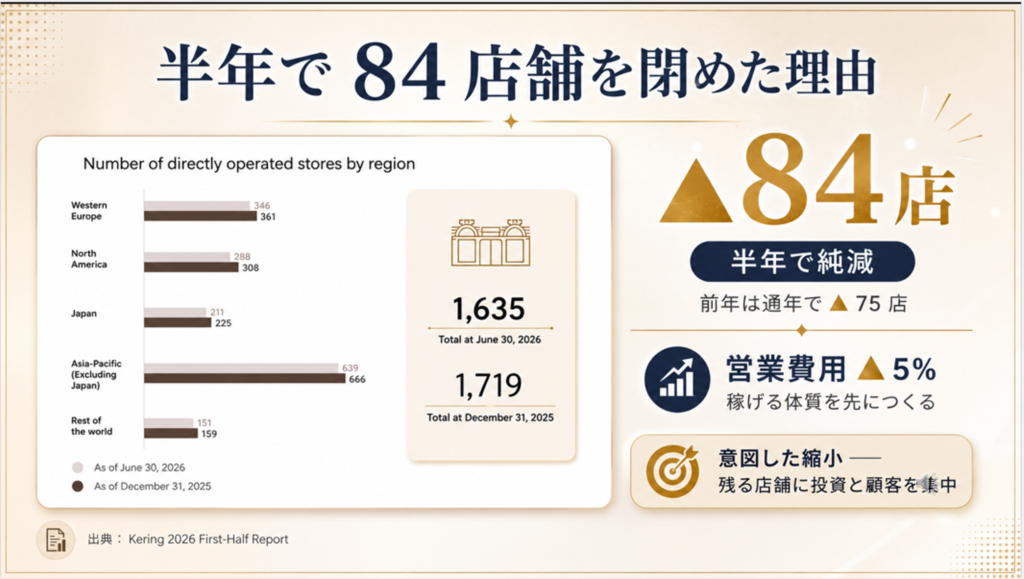
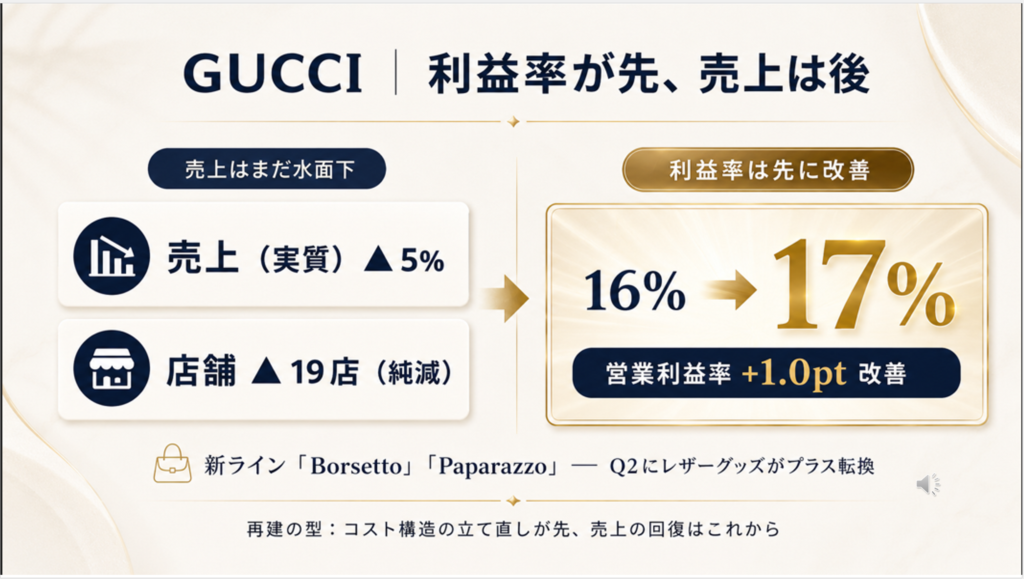
Kering cut its directly operated store count by a net 84 over the half and reduced operating expenses by 5%. Gucci’s revenue fell 5%, but its operating margin improved from 16% to 17%. The sequencing of the turnaround is explicit: fix the margin first, wait for the revenue.
The investment and finance view
For M&A and brand investment, this comparison argues for assessing category mix rather than revenue scale. Richemont is capturing the full benefit of jewellery demand; LVMH is stabilising earnings through breadth of portfolio.
For Kering, store closures compressed fixed costs and lifted the margin. From here the valuation question is no longer cost reduction but whether Gucci’s like-for-like sales and inventory turnover recover.
A CPA’s view
Analysing these businesses means looking past revenue growth to operating margin, store count, fixed cost structure and capital efficiency by brand.
There is a tax dimension too: store rationalisation and international brand expansion affect exit costs, transfer pricing and the management of intangibles.
Brand is a major asset that the balance sheet reflects only partially. That is precisely why understanding value in this sector requires reading strategy and financial figures together rather than separately.